Freedom from glasses starts here.
Myopia, also called short sightedness, is a common refractive error where distant objects look blurry because the eye focuses light in front of the retina. It often starts in childhood, can change through the teenage years as the eye grows, and then usually stabilises in adulthood. The good news is myopia is very manageable, with effective options for clear vision and, in some cases, options to reduce dependence on glasses or contact lenses.
Myopia affects how your eye focuses light, mainly impacting distance vision. It is not unusual, and it is one of the most common reasons people need glasses.
With myopia, distance vision is the main issue. Road signs, the classroom board, and TV can look blurred, while near vision is usually clearer. Many people notice they can read comfortably up close but struggle to see detail across the room.
Myopia typically happens when the eye is a little too long from front to back, or the cornea is too curved. This causes light to focus in front of the retina instead of directly on it, which is what creates the distance blur.
Myopia mainly blurs distance vision, while hyperopia tends to affect near vision more (and sometimes distance, especially as focusing effort increases). Astigmatism can cause blur or distortion at both distance and near because the eye does not focus light evenly. If you want a clearer breakdown, our astigmatism page explains why vision can feel shadowed, stretched, or “ghosted.”
Some people notice myopia gradually, while others feel it suddenly when their prescription changes or their glasses are no longer strong enough.
This is the classic symptom. You may struggle with street signs, faces at a distance, presentations, or seeing clearly while driving, especially at night.
Squinting can temporarily sharpen vision by reducing the blur circle, which is why many people do it without realising. Ongoing squinting can also lead to eye fatigue, particularly after long days of visual effort.
When your prescription is out of date, your eyes may work harder than they should, which can contribute to headaches or a tired, heavy feeling around the eyes. This can be more obvious with screen heavy work or night driving.
Not all myopia behaves the same. The amount of myopia and how it changes over time influences both correction choices and long term monitoring.
Mild to moderate myopia is typically straightforward to correct with glasses or contact lenses. Higher myopia may still be correctable, but it can also come with extra considerations for eye health monitoring. The focus is not to be alarmist, but to make sure you have the right checks at the right intervals.
In children and teenagers, myopia can increase as the eye grows. If prescriptions are changing quickly, monitoring matters because progression can increase the risk of higher myopia later on. Management options may be worth discussing depending on age, rate of change, and family history.
In some cases, higher myopia is linked with structural changes in the back of the eye that can increase the risk of retinal issues. This is why people with higher prescriptions are often advised to have regular retinal checks, and to seek urgent review if certain warning signs appear.
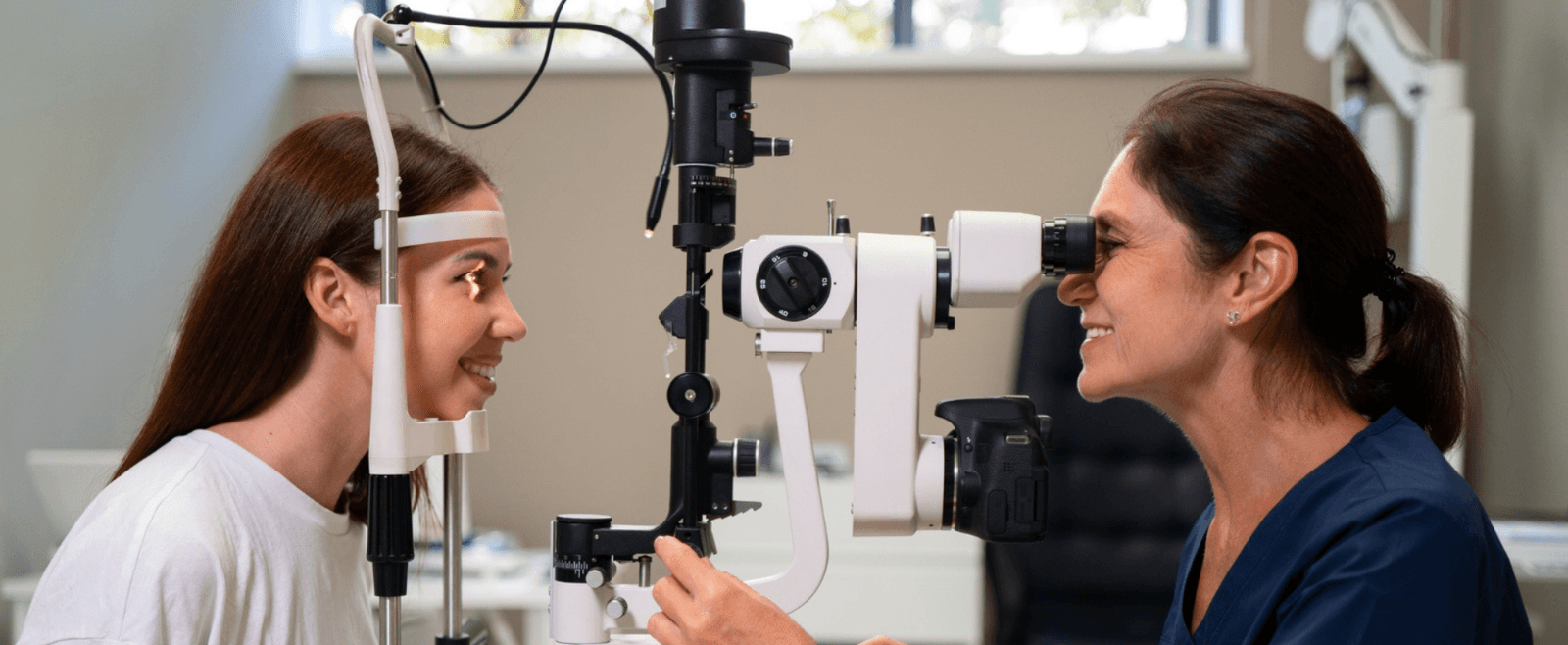
Myopia progression is influenced by a mix of genetic and environmental factors. For most people, it is not one single cause.
If one or both parents are short sighted, the chance of developing myopia is higher. Genetics can also influence how early myopia starts and how much it progresses.
Long stretches of close up work may be a factor for some children, especially when combined with limited outdoor time. This does not mean reading is “bad,” but it does support the idea of balanced visual habits, particularly during growing years.
Studies have linked more time outdoors with a lower risk of developing myopia in children. It is not a guarantee, but it is one of the more consistent findings in myopia research, and it is a simple, healthy habit to encourage.
Diagnosis is more than just finding the right glasses prescription. A complete assessment also checks eye health, which becomes increasingly important with higher prescriptions.
Refraction measures your prescription and determines what correction gives the clearest vision. This is also where we check for co existing issues like astigmatism, which is common alongside myopia.
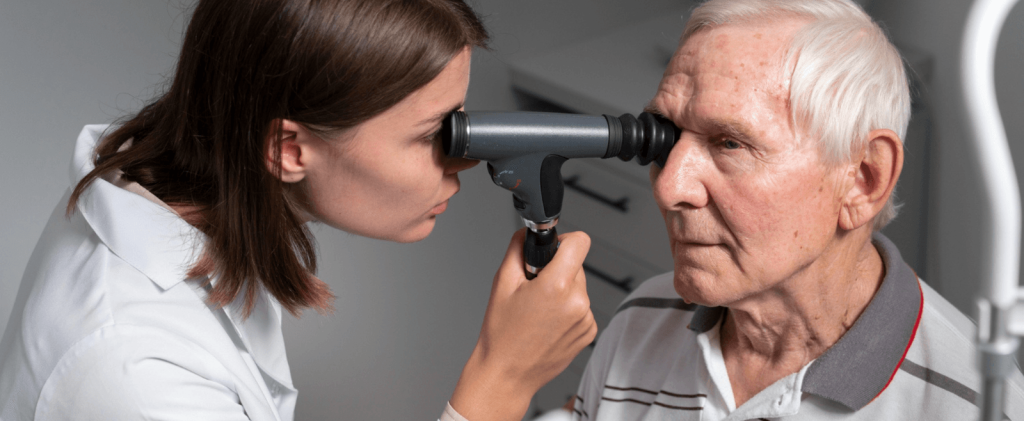
A thorough exam looks at the overall health of the eye, including the retina. This is particularly important for higher myopia, where retinal monitoring becomes more relevant over time.
Axial length measurement looks at the length of the eye. In children, it can be helpful for tracking progression over time and understanding whether the eye is continuing to elongate, even if the prescription changes are subtle.
There are multiple ways to correct myopia, and the best choice depends on your prescription, corneal measurements, lifestyle, and long term goals.
Glasses are simple, safe, and effective. They are often the easiest option for children, and they remain a great option for adults who want reliable clarity without the maintenance of contact lenses.
Soft contact lenses are a common choice for everyday convenience and sport. If astigmatism is also present, toric contact lenses may be needed to keep vision crisp and stable.
Laser vision correction reshapes the cornea to improve focus, and it can reduce dependence on glasses or contact lenses when you are suitable. Options may include LASIK and PRK, which you can explore through our main laser eye surgery page. If PRK is more relevant for you, our PRK eye surgery page explains when it may be recommended and what recovery typically looks like.
For people with higher prescriptions, or when corneal thickness or shape makes laser less suitable, an implantable lens may be an option. An ICL sits inside the eye to correct vision without removing the natural lens. You can read more on our implantable collamer lens page.
In some older patients, lens based correction may be discussed, particularly if there are early lens changes or a desire for a long term correction approach. This can include refractive lens exchange, which is assessed carefully based on age, prescription, eye health, and visual priorities. If this is relevant, our refractive lens exchange page covers the basics and what suitability involves.
If your clinic offers myopia control, this section can be expanded into specific pathways. If not, it can be framed as referral level guidance and education for families.
Certain spectacle lens designs aim to slow progression in children while still providing clear vision for school and daily activities. Suitability depends on age, prescription, and progression pattern.
Some specialty contact lenses are designed with myopia control in mind. They can be effective in selected children, but they require responsible wear, good hygiene, and close follow up.
Low dose atropine may be used in some children to help slow progression. It requires prescribing and monitoring, and the approach is usually tailored to age, growth stage, and progression risk.
Outdoor time and balanced visual habits can support healthy development. Simple changes like building in breaks from sustained close work and encouraging time outside can be helpful without turning it into strict rules that are hard to follow.
Higher myopia can be associated with increased risk of certain eye conditions. The key message is monitoring, not panic.
People with higher myopia may have a higher risk of retinal tears or detachment. It is important to know the warning signs and seek urgent assessment if they occur. If a detachment is diagnosed, treatment may be needed to protect vision, and our retinal detachment page explains what that usually involves.
In some cases, high myopia can be linked with changes in the macula, which can affect central detail vision. Monitoring with appropriate retinal checks helps detect problems early.
Higher myopia has been associated with increased risk of glaucoma and earlier cataract changes in some people. That does not mean it will happen to you, but it does mean regular eye health assessments matter. If you want to learn more about glaucoma, see our glaucoma page.
If you suspect myopia is developing or changing, it is worth booking an assessment so you can get clear vision and the right monitoring plan.
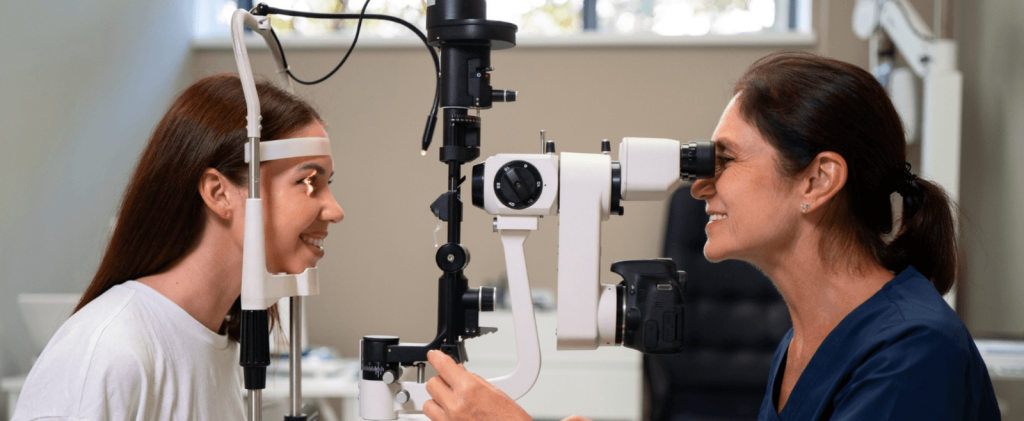
Blurred distance vision, headaches, night driving issues, or frequent prescription changes are common reasons to get checked. If you are considering vision correction procedures, an assessment helps confirm what options are realistic for your eyes and your lifestyle.
Squinting, sitting close to screens, rubbing eyes, or difficulty seeing the board at school can all be signs. Some children do not realise their vision is blurred because it changes gradually, so testing matters when behaviours shift.
If you notice flashes of light, a sudden increase in floaters, or a curtain or shadow over vision, seek urgent assessment. These can be warning signs of retinal problems, and time matters.
Myopia care is not just about getting the right prescription. It is also about making sure your eyes stay healthy long term.
Myopia care is not just about getting the right prescription. It is also about making sure your eyes stay healthy long term.
Clear vision starts with a precise prescription, but it should always be paired with the right eye health checks, especially if your prescription is higher or changing.
We can discuss a full range of options, from glasses and contact lenses through to suitability based surgical pathways, so you are not pushed into a one size fits all plan.
To book an appointment, visit our your appointment page. Bringing your current prescription, contact lens details, and any family history of myopia can help guide the conversation and planning.
Glasses and contact lenses correct myopia while you wear them. Laser or implantable lens options may reduce dependence on glasses or contacts in suitable candidates, but suitability testing is essential and vision can still change over time.
Myopia often progresses through childhood and teenage years, then stabilises in adulthood. Some adults can still have changes over time, especially if their prescription was still changing in early adulthood.
Yes. Myopia is the medical term for short sightedness, where distance vision is blurred and near vision is usually clearer.
Laser eye surgery can correct myopia in many suitable patients, but not everyone is a candidate. Corneal shape, thickness, dryness, and prescription range all matter.
High myopia refers to stronger prescriptions that are more likely to be linked with certain eye health risks, particularly retinal issues. The key is appropriate monitoring and knowing the warning signs that need urgent review.
Yes, when used correctly. Good hygiene, correct wear time, and regular check ups are important, and toric lenses may be needed if astigmatism is also present.
Freedom from glasses starts here.
Mild, moderate and high myopia
Progressive myopia in children
Pathological (degenerative) myopia
Long stretches of close up work may be a factor for some children, especially when combined with limited outdoor time. This does not mean reading is bad, but it does support the idea of balanced visual habits, particularly during growing years.
Refraction measures your prescription and determines what correction gives the clearest vision. This is also where we check for co-existing issues like astigmatism, which is common alongside myopia.
A thorough exam looks at the overall health of the eye, including the retina. This is particularly important for higher myopia, where retinal monitoring becomes more relevant over time.
Axial length measurement looks at the length of the eye. In children, it can be helpful for tracking progression over time and understanding whether the eye is continuing to elongate, even if the prescription changes are subtle.
Glasses for myopia
Contact lenses for myopia
Laser eye surgery for myopia
Implantable collamer lens (ICL) for myopia
Lens based options
Retinal tears and retinal detachment
Myopic macular changes
Glaucoma and cataract risk
Adults
Urgent symptoms (any age)
For higher prescriptions structured monitoring helps track change, guide management, and pick up any issues early.
Rediscover clearer vision

Loacation: G11-12/566 St Kilda Road, Melbourne VIC 3004
Phone: (03) 9070 0955
Fax: (03) 9978 9426
E-mail: info@cityeyesurgeons.com.au
Copyright © 2025 City Eye Surgeons. All rights reserved. Privacy Policy.