03 9070 0955 03 9070 0955

PresbyMAX

Freedom from glasses starts here.

Improve your reading vision with PresbyMAX

Can laser eye surgery help get rid of your reading glasses? Absolutely! If you are seeking a solution to your presbyopia or reading vision problems, discover how PresbyMAX can help you achieve visual freedom from reading glasses.

Presbyopia – a normal ageing process

From around 45 years of age, the near vision of almost all people distinctly declines. This is not caused by any sort of visual defect, but rather a perfectly natural, age-related process whereby the lens of the eye loses mobility. For that reason, the eye becomes unable to adjust clearly to different distances. Blurred vision, especially at close range, is the result.


For the treatment of presbyopia – the medical term for this age-related long-sightedness – alternatives to reading or multifocal glasses, multifocal contact lenses or intraocular lenses are now available.

PresbyMAX

PresbyMAX is a minimally invasive laser treatment for presbyopia performed using technologically advanced SCHWIND AMARIS eye laser systems. The treatment is completed in just a few minutes, and the actual laser ablation takes only seconds. Rapid laser pulses gently model the cornea with high precision.

Several different treatment variants are possible with the PresbyMAX procedure. Your specialist will advise you about the variant which suits you best.

Unlike conventional LASIK treatment, multiple precisely calculated focal points are created in the eye – similar to the principle applied in multifocal contact or intraocular lenses. The cornea is modelled at the centre for near vision and towards the periphery for distant vision. This results in a good depth of field and high quality vision at all distances. Visual acuity typically improves rapidly, especially at near distance. Adaptation to the new visual impression usually takes slightly longer than after conventional LASIK treatment.
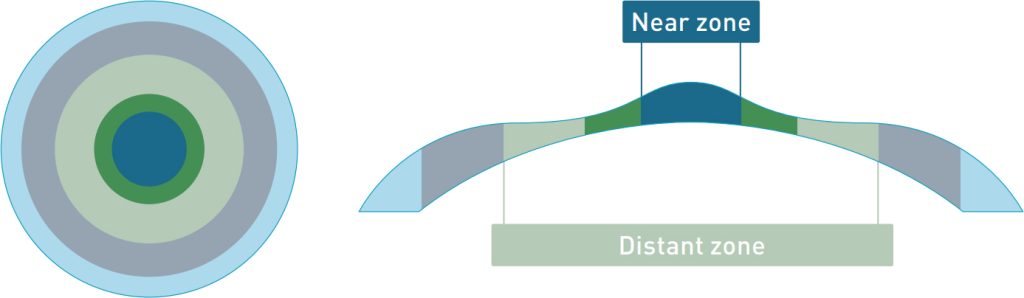
Schematic diagram and cross-section of the cornea after a PresbyMAX treatment. The near zone typically makes it possible to read without corrective lenses. The intermediate zone favours good vision at medium distances, e.g. at a computer workstation. The distant zone provides for good vision at greater distances. The transition zone contributes to the stability of the treatment result.

Who can be considered for treatment with PresbyMAX?

  • People over the age of 40 who are struggling with near vision and find reading glasses inconvenient
  • Patients with presbyopia and other refractive errors like myopia, hyperopia or astigmatism
  • Patients who have already undergone laser treatment for optimal distance vision and are now needing glasses only for reading and other close range tasks
  • Presbyopic patients who have already undergone cataract surgery and now wish to be able to read without glasses

To find out if PresbyMAX is suitable for you, book a consultation at City Eye Surgeonstoday

How can I find out if PresbyMAX is suitable for me?

Because we customize the PresbyMAX treatment to each patient, you will have to attend a detailed eye examination to assess your suitability.

At this appointment, the degree and nature of your refractive error, curvature and thickness of the cornea, and other diagnostic data are assessed. We will also ask you questions about your job, hobbies, vision requirements and expectations of the treatment that may affect the decision to proceed. You will meet your specialist to discuss your suitability and a bespoke treatment plan will be customized for you.

When will I regain full vision?

You can generally read the newspaper without glasses again only a few hours after the treatment. Good intermediate and distant vision typically sets in within a week. Further improvement in quality of vision and full adjustment to multifocal sight are generally complete after several weeks.

What are the benefits of PresbyMAX?

  • Very short, minimally invasive treatment time of just a few minutes
  • Very rapid restoration of near vision
  • High quality of vision at all visual distances
  • Possible simultaneous correction of visual defects such as myopia, hyperopia or astigmatism
  • High patient satisfaction
  • Can be reversed if required
  • Impressive clinical results

PresbyMAX vs Other Presbyopia Treatments

PresbyMAX is one of several ways to manage presbyopia. The best option depends on your eyes, your goals, and how you feel about different trade-offs.

PresbyMAX vs Reading Glasses or Multifocal Contacts

Reading glasses are simple and predictable, and they do not involve surgery, but they can be inconvenient if you switch between tasks often. Multifocal contact lenses can reduce glasses dependence, but not everyone tolerates them, and dryness can limit comfort.

PresbyMAX vs Monovision Laser

Monovision laser usually sets one eye for distance and the other for near. PresbyMAX aims to create a broader range of focus through a multifocal corneal profile and may be planned with blended elements depending on your needs. Monovision is still a useful strategy for some patients, and it is explained further on monovision.

PresbyMAX vs Lens-Based Options

Lens-based options can include refractive lens exchange or cataract-style surgery with certain lens types. These options are more commonly considered as people get older, or when lens changes are already present. If you are comparing pathways, refractive lens exchange outlines how lens replacement differs from corneal laser correction, including the long-term considerations.

Why Choose City Eye Surgeon for PresbyMAX

Detailed Suitability Screening

Safe outcomes rely on detailed testing, especially corneal mapping, tear film assessment, and careful planning around pupil size and night vision needs.

Personalised Treatment Planning

PresbyMAX works best when the plan is built around your visual priorities and your eyes’ measurements. That includes clear discussion of trade-offs, not just the potential benefits.

Structured Aftercare and Ongoing Support

Aftercare is part of the treatment, not an add-on. Follow-up appointments help confirm healing is on track, manage dryness, and support vision stabilisation over time.

Book a PresbyMAX Consultation in Melbourne

A consultation is the best way to confirm whether PresbyMAX is suitable for you and what results are realistic for your eyes. Bring your current glasses or contact lens details, any recent prescription history, and a medication list. To book, you can contact the team via contact us.

FAQs about PresbyMAX

Will PresbyMAX remove the need for reading glasses?

Not always. Many people reduce their reliance on reading glasses for everyday tasks, but some still need glasses for very small print, prolonged reading, or low-light situations.

How does PresbyMAX work?

The treatment involves creating bi-aspheric multifocal ablation profiles that extend the depth of focus for all distances in the eye – like the principle of multifocal contact or intraocular lenses.


The goal of PresbyMAX treatment is to achieve vision without glasses for day-to-day activities. In poor light, glasses can be advantageous for reading.

It is sensible to repeat treatment if, after laser treatment, the presbyopia continues to progress and you require reading glasses once again. Your specialist will make the final decision after a thorough examination.

Presbyopia can be treated with PresbyMAX laser eye surgery, LASIK/PRK with monovision, or refractive lens exchange/cataract surgery with multifocal lenses.

In some cases, enhancement may be discussed if the eyes have healed fully and the prescription is stable. Whether it is appropriate depends on corneal measurements, visual goals, and the reason for the change.

PresbyMAX

Freedom from glasses starts here.

Presbyopia is the normal, age-related loss of near focus that makes small print harder to read. It often shows up as holding your phone further away, needing brighter light, or getting tired eyes after close work. PresbyMAX is a laser vision correction approach designed specifically for presbyopia. The aim is to improve near and intermediate vision while maintaining strong distance vision, so you can rely less on reading glasses for everyday tasks

What is PresbyMAX

PresbyMAX is a presbyopia-focused laser treatment plan. It is designed to increase your functional range of vision, so tasks like reading, using a computer, and looking across a room can feel easier without constantly swapping between glasses.

How PresbyMAX Works

PresbyMAX uses laser reshaping to create a controlled multifocal corneal profile. Rather than aiming for a single point of focus, the treatment is planned to increase depth of focus across near, intermediate, and distance. The goal is practical vision across common day-to-day distances, while preserving visual quality as much as your eyes allow.

PresbyMAX vs standard laser eye surgery

Standard laser vision correction usually targets one main focal point, most commonly distance vision. PresbyMAX is planned specifically for presbyopia, where the goal is a useful range of vision rather than one single distance.

What vision problems PresbyMAX can correct

PresbyMAX is designed to address:
  • Presbyopia, which causes near and reading blur
  • Presbyopia combined with short-sightedness, long-sightedness, and or astigmatism

Signs you may be developing presbyopia

Presbyopia can feel subtle at first. Many people assume they are just tired, using screens too much, or need “slightly stronger” glasses.
Common presbyopia symptoms
Common symptoms include:
  • Holding text further away to make it clearer
  • Eye strain or fatigue with reading and screen work
  • Headaches after close tasks
  • Needing brighter light to read comfortably
  • Switching between multiple pairs of glasses for different tasks
When presbyopia starts
Presbyopia typically begins in the early to mid 40s and continues to progress over time. It is caused by gradual stiffening of the natural lens inside the eye, which reduces the eye’s ability to change focus up close.

Am I a good candidate for PresbyMAX

A good candidate is someone whose eyes can safely support a presbyopia-focused laser plan and whose lifestyle goals align with the trade-offs that can come with multifocal vision correction.

Key suitability checks

Your consultation focuses on measurements and lifestyle needs, including:

  • Corneal shape and thickness, including tomography
  • Tear film and dry eye assessment
  • Pupil size and how your eyes behave in lower light
  • Refraction stability and overall eye health
  • Your priorities, such as night driving, screen-heavy work, sport, or fine close detail

When PresbyMAX may not be recommended

PresbyMAX may not be recommended if you have:

  • Corneal conditions that increase ectasia risk, including keratoconus or suspicious scan patterns
  • Significant dry eye that is not controlled
  • An unstable prescription
  • Other eye disease that could affect vision quality or healing

If corneal stability is a concern, your specialist may discuss non-laser pathways, or stabilisation options such as corneal cross linking when clinically appropriate.

PresbyMAX planning is personalised. The goal is to balance range of vision with visual clarity, based on what matters most to you.

Blended vision and micro-monovision planning

Some PresbyMAX plans use a blended approach between the eyes. This means vision can be balanced so that one eye supports near tasks slightly more while the other supports distance slightly more, while still aiming for comfortable binocular vision overall. The exact balance depends on your daily tasks and your tolerance for mild compromise at one end of the range.

PresbyMAX hybrid profiles

Hybrid profiles are designed to balance range of vision with visual quality. Rather than applying a standard pattern, the treatment can be planned to suit your prescription, corneal measurements, pupil size, and your visual priorities, including night driving and screen work.

PresbyMAX assessment and pre-operative testing

PresbyMAX suitability is decided through a structured assessment. This is where your surgeon confirms safety, discusses realistic outcomes, and matches the plan to your lifestyle.

Tests performed at your consultation

Your consultation commonly includes:

  • Corneal tomography to map shape and stability
  • Refraction testing to confirm prescription and stability
  • Eye pressure measurement
  • Pupil metrics and low-light considerations
  • Ocular surface and tear film assessment
  • Retinal examination
Contact lens break before testing

Contact lenses can temporarily alter corneal shape, especially rigid lenses. A contact lens break helps ensure the scans reflect your natural cornea, which is essential for safe planning. Our clinic will provide the right timeframe based on your lens type and wearing pattern.

Trial and goal-setting

This is where you define what you want your vision to do. Your surgeon will usually ask about “must-have” tasks such as reading a menu, using a computer, driving at night, or seeing dashboard and phone clearly. You will also discuss whether you are comfortable with a small compromise in crisp distance vision in exchange for better near and intermediate function.

PresbyMAX treatment options

What happens during PresbyMAX laser treatment

PresbyMAX is performed using laser reshaping techniques. The exact method may follow a LASIK-style or PRK-style approach depending on your corneal measurements and what is safest for you.

Step-by-step overview

On the day, treatment typically includes:
  • Numbing eye drops for comfort
  • Laser reshaping based on your personalised PresbyMAX plan
  • A short period of observation in clinic before you go home
If your plan uses a flap-based approach, the steps align with lasik eye surgery. If a surface approach is chosen, the recovery profile is closer to prk eye surgery

How long It takes

The laser time itself is short, but the total appointment is longer due to preparation, checks, and post-treatment instructions. You should plan transport home, as your vision may be blurry immediately afterwards.

Comfort during the procedure

Most people feel pressure and awareness rather than pain during treatment because the eye is numbed. After treatment, irritation and light sensitivity can occur, and the level of discomfort depends on whether your plan is flap-based or surface-based.

Recovery after PresbyMAX

Recovery varies between patients and depends on the procedure style used. It is normal for vision to fluctuate early while the eyes heal and adapt.

First week

In the first week, it is common to notice:
  • Dryness and a gritty sensation
  • Light sensitivity
  • Fluctuating clarity, especially between near and distance
  • More noticeable symptoms in the early days if a surface approach is used
Following drop instructions and avoiding eye rubbing are important for healing and comfort.

Vision stabilisation over weeks to months

PresbyMAX involves adapting to a new way the eyes share focus across distances. This process is often called neuroadaptation. Many people notice steady improvement over weeks, with near and intermediate performance settling more gradually. Some patients describe the change as their vision becoming more “automatic” with time.

Follow-up schedule

Follow-up visits matter because they allow your surgeon to monitor healing, confirm corneal stability, check refraction, and manage dryness early. Regular review also helps identify whether your vision is settling as expected or whether adjustments need to be discussed.

Results you can expect from PresbyMAX

PresbyMAX is designed to improve your range of functional vision, but outcomes vary and it is important to understand the trade-offs.

The main goal: Better range of vision

The main goal is reduced dependence on reading glasses for many daily tasks, particularly near and intermediate work. It is not a guarantee that you will never need glasses again, especially for very fine print or low-light reading.

Visual quality and trade-offs

Because PresbyMAX is planned for range of focus, some people notice halos or glare at night, particularly early on. Some also notice that distance vision can feel slightly less crisp than single-focus distance laser correction, especially during adaptation. These factors are discussed during your assessment so expectations are realistic.

Long-term considerations

Presbyopia continues to progress with age, even after treatment. Over time, you may still need glasses for certain tasks, or you may discuss future options such as enhancements or lens-based procedures depending on age and eye health.

PresbyMAX vs other presbyopia treatments

PresbyMAX is one of several ways to manage presbyopia. The best option depends on your eyes, your goals, and how you feel about different trade-offs.

PresbyMAX vs monovision Laser

Monovision laser usually sets one eye for distance and the other for near. PresbyMAX aims to create a broader range of focus through a multifocal corneal profile and may be planned with blended elements depending on your needs. Monovision is still a useful strategy for some patients, and it is explained further in monovision.

PresbyMAX vs lens-based options

Lens-based options can include refractive lens exchange or cataract surgery with certain lens types. These options are more commonly considered as people get older, or when lens changes are already present. If you are comparing pathways, refractive lens exchange outlines how lens replacement differs from corneal laser correction, including the long-term considerations.

Why choose City Eye Surgeons for PresbyMAX

Myopia care is not just about getting the right prescription. It is also about making sure your eyes stay healthy long term.

Structured aftercare and ongoing support

Aftercare is part of the treatment, not an add-on. Follow-up appointments help confirm healing is on track, manage dryness, and support vision stabilisation over time.

Detailed suitability screening

Safe outcomes rely on detailed testing, especially corneal mapping, tear film assessment, and careful planning around pupil size and night vision needs.

Personalised treatment planning

PresbyMAX works best when the plan is built around your visual priorities and your eyes’ measurements. That includes clear discussion of trade-offs, not just the potential benefits.

FAQs

Will PresbyMAX remove the need for reading glasses?
Not always. Many people reduce their reliance on reading glasses for everyday tasks, but some may still need glasses for very small print, prolonged reading, or low-light situations.
Adjustment varies. Some people adapt quickly, while others need weeks to months for vision to feel natural across distances. This adaptation is part of how multifocal vision correction works.
It can be, depending on your prescription and measurements. Astigmatism can often be addressed as part of the treatment plan.
In some cases, enhancement may be discussed if the eyes have healed fully and the prescription is stable. Whether it is appropriate depends on corneal measurements, visual goals, and the reason for the change.

Book a PresbyMAX consultation in Melbourne

A consultation is the best way to confirm whether PresbyMAX is suitable for you and what results are realistic for your eyes. Bring your current glasses or contact lens details, any recent prescription history, and a medication list. To book, you can contact the team via contact us

Rediscover clearer vision