03 9070 0955 03 9070 0955

PRK Eye Surgery

Freedom from glasses starts here.

Introduction

Like LASIK, PRK is a laser refractive procedure that corrects the focusing power of the eye to reduce your dependence on glasses and contact lenses. If you have short-sightedness, long-sightedness or astigmatism, your vision is blurry without glasses or contact lenses because light does not come to a clear focus at the back of the eye.


PRK surgery permanently corrects for short-sightedness, long-sightedness and astigmatism by changing the curvature of the front surface of the eye so that light enters and focuses clearly at the back of the eye. In doing so, it removes the need for glasses and contact lenses to achieve clear vision.


PRK surgery does not involve the creation of a flap and that is the main difference that distinguishes it from LASIK. In PRK, the reshaping ablation is performed directly on the surface of the cornea, hence it is also called surface ablation.
Who is suitable for PRK surgery?

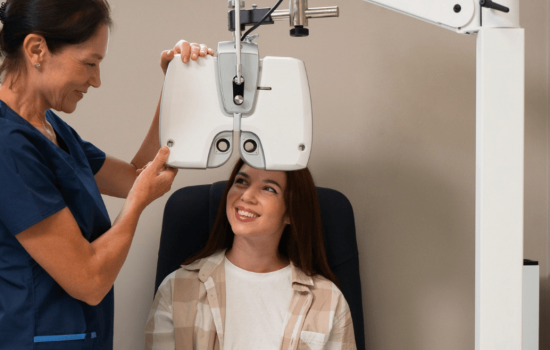
To be a suitable candidate for PRK surgery, you should be at least 18 years of age, have had a stable prescription for the last 12 months and have healthy eyes.

PRK is generally preferred over LASIK surgery if you have thinner corneas, dry eyes, or if you engage in high impact contact sports or are in certain vocations such as the police force or armed forces.

At your laser eye surgery consultation, a detailed assessment will be performed to ascertain your prescription as well as your corneal thickness, shape and general eye health. You will be advised if PRK is the preferred treatment for your eyes and lifestyle. If LASIK and PRK are not suitable for you, you may be recommended alternative treatment options such as ICLrefractive lens exchange or cataract surgery.

How is PRK surgery performed?

Conventional PRK surgery is a two-step procedure that involves removal of the surface cells covering the cornea (the epithelium) with alcohol and a blade or brush, followed by reshaping of the underlying cornea.

At City Eye Surgeons, PRK surgery is performed with the Schwind Amaris 1050RS which simultaneously removes the corneal epithelium and reshapes the cornea in a single step. This single-step “no touch” laser treatment is commonly known as trans-PRK surgery.


Trans-PRK surgery does not require the use of any surgical instruments, thus allowing for a gentler, less invasive and more comfortable experience for you. The recovery time is also quicker than conventional PRK surgery.


At the end of the procedure, a soft contact lens is placed on the eye to allow re-growth of the corneal epithelium, which typically takes 3 to 5 days.

Results You Can Expect From PRK

PRK can deliver strong visual outcomes in suitable candidates, but results should be framed around real-world tasks and long-term eye changes.
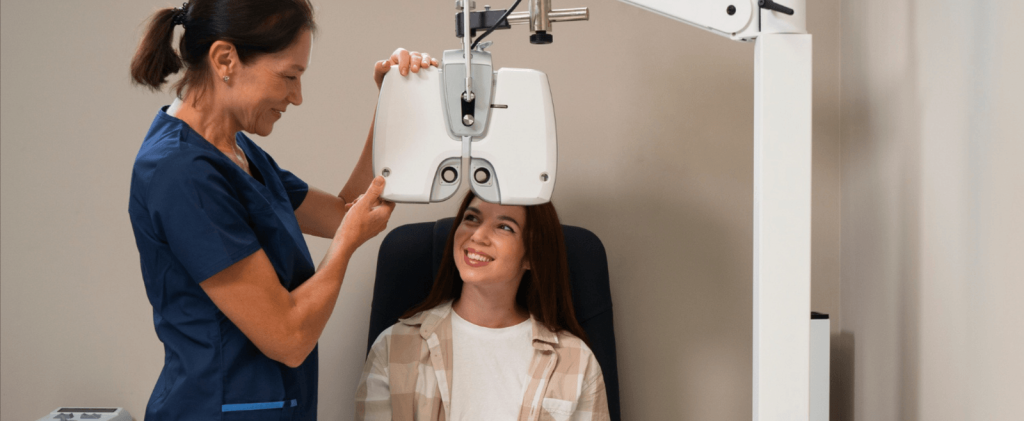
Visual Outcomes

Many people achieve strong distance vision after PRK. Some may still need glasses for certain tasks, particularly fine near work as presbyopia develops later in life, or for specific night driving situations depending on the eye and prescription.

PRK and Long-Term Stability

PRK outcomes can be very stable, but vision can still change over time due to natural ageing, including presbyopia. This is a normal change in how the eye focuses up close and is not a failure of the procedure.

Enhancements After PRK

Enhancements are considered only after the eye has stabilised and the surface has fully healed. Timing matters, because treating too early can reduce predictability and increase risk.

Why Choose City Eye Surgeons for PRK

Thorough Suitability Testing and Conservative Planning

We focus on detailed measurements and risk assessment to confirm whether PRK is the safest option for your eyes, and to plan treatment conservatively.

Experience Across Laser Vision Correction Options

Because PRK is one of several refractive procedures, we can compare it fairly with other options and recommend the most appropriate approach for your anatomy and goals, rather than forcing a procedure to fit.

Structured Aftercare and Long-Term Monitoring

Aftercare is structured to support healing, manage dryness, and monitor visual outcomes over time. This is especially important with PRK, where stabilisation takes longer than flap-based procedures.

Book a PRK Assessment in Melbourne

To start, book via your-appointment so you can follow the correct preparation steps, including contact lens break instructions. If you are unsure what option suits you, a broader refractive consultation through refractive-surgery can also be a helpful entry point.

Bring your current prescription details, contact lens information, a medication list, and any relevant eye history.

FAQs about PRK Eye Surgery

How painful is PRK recovery?

Most discomfort is in the first few days while the surface heals. Light sensitivity, watering, and a gritty sensation are common. Discomfort usually improves as the epithelium regrows and the eye settles.

The surface usually heals over several days, but vision can fluctuate for weeks. Full stabilisation can take months, depending on the person and the prescription treated.

Driving depends on when your vision is safe and meets the required standard, and after your post-op review confirms it is appropriate. Many people need more time before driving compared with LASIK.

Haze is a corneal healing response that can cause blur or glare. Mild haze can improve over time, but prevention is the priority through screening, treatment planning, and correct post-op medication use.

Neither is universally “safer” for everyone. PRK can be the safer choice in certain eyes and lifestyles because it avoids a flap. LASIK can have a faster early recovery. The safest procedure is the one that fits your anatomy and risk profile.

PRK Eye Surgery

Freedom from glasses starts here.

Photorefractive keratectomy (PRK) is a type of laser vision correction that reshapes the cornea to reduce reliance on glasses or contact lenses. It is often recommended when LASIK eye surgery is not the best fit, such as when corneal thickness is borderline or when avoiding a corneal flap is preferred.

What Is PRK eye surgery

PRK is a surface-based laser procedure. Instead of creating a flap, the laser treatment is performed on the front surface of the cornea.

How PRK works

The corneal surface layer (epithelium) is removed at the same time the excimer laser reshapes the cornea underneath. Once the laser treatment is complete, a soft bandage contact lens is placed to support comfort and healing while the surface cells regrow. Over the following days, the epithelium heals and smooths out, and vision improves gradually as the eye settles.

What PRK can correct

PRK can be used to correct common refractive errors, including:
  • Myopia (short-sightedness)
  • Hyperopia (long-sightedness)
  • Astigmatism
Your exact suitability depends on prescription range, corneal measurements, and overall eye health.

PRK vs LASIK

PRK is surface-based and does not involve a corneal flap. LASIK is flap-based, with laser reshaping performed under the flap. This difference is one of the main reasons PRK may be recommended for people where flap risk is a concern or where corneal thickness is better suited to a surface approach.

Am I a good candidate for PRK

PRK is not automatically “better” or “worse” than other procedures. It is simply a different approach that can be the safer or more appropriate option for certain eyes and lifestyles.

Who PRK often suits

PRK is commonly considered for:
  • People with thinner corneas where flap creation may not be ideal
  • People in jobs or sports where eye impact risk is higher and avoiding a flap is preferred
  • Certain corneal shape profiles where surface treatment is the safer plan 
If corneal weakness is suspected, PRK may not be appropriate either, which is why screening for keratoconus risk is part of responsible refractive planning.

Eligibility factors we assess

A PRK assessment typically looks at:
  • stability over time
  • Corneal thickness and shape (tomography)
  • Tear film and dry eye profile
  • Pupil size and night vision risk factors
  • Retina and general eye health
  • Lifestyle needs, including screen work, driving, sport, and work environment

When PRK may not be recommended

PRK may not be recommended if there is:
  • Significant ectasia risk or known keratoconus
  • Uncontrolled dry eye or significant ocular surface disease
  • Unstable prescription
  • Other eye conditions that increase risk or reduce the predictability of results
If PRK is not suitable, alternatives like implantable-collamer-lens or other refractive surgery options may be discussed depending on your eyes and goals.

PRK vs other vision correction options

Comparing options properly means looking at safety, predictability, recovery, and what you want your vision to do day to day.
PRK vs SmartSight
PRK is a surface procedure with a healing phase while the epithelium regrows. SmartSight is a small-incision approach that removes a small piece of corneal tissue through a keyhole opening. Suitability depends on prescription, corneal measurements, and how your eyes respond to dry eye testing. Not everyone is a candidate for every procedure, so this is decided through assessment rather than preference alone.
PRK vs Implantable Collamer Lens (ICL)

PRK reshapes the cornea, while ICL corrects vision by placing a lens inside the eye without reshaping the cornea. ICL may be considered for higher prescriptions or when corneal factors limit laser options. The right choice depends on eye anatomy, prescription, risk profile, and long-term planning.

PRK consultation and pre-operative testing

The consultation is where we decide whether PRK is appropriate, and whether it is the best option among the available procedures.

Tests performed before PRK
Your pre-operative testing commonly includes:
  • Refraction to confirm your prescription
  • Corneal mapping (tomography) and corneal thickness measurement
  • Pupil size assessment (important for night vision planning)
  • Dry eye assessment and ocular surface evaluation
  • Eye pressure measurement
  • Retinal examination to confirm eye health
Contact lens break before your assessment
Contact lenses can temporarily change corneal shape. A contact lens break helps ensure the measurements used for planning are accurate. The timing depends on the type of lens you wear, and you will be given clear instructions before your appointment.
Setting expectations before PRK
PRK recovery is typically slower than LASIK. Vision often fluctuates early, and it can take longer for sharpness to settle fully. Having this conversation up front prevents frustration and helps you plan time off work and driving.

What to expect during PRK eye surgery

PRK is usually performed as an outpatient procedure using numbing eye drops. The treatment itself is quick, but planning and aftercare are what protect your result.

Step-by-step PRK procedure overview

On the day of PRK:
  1. Numbing drops are used to keep you comfortable.
  2. In a single step, the excimer laser removes the surface layer of the cornea and reshapes the cornea based on your prescription and treatment plan.
  3. A bandage contact lens is placed to support healing and comfort.
You will be given instructions on drops, protection, and what to avoid in the first few days.

How long PRK takes

The laser portion is brief, but you should expect a longer appointment overall to allow for preparation, checks, and post-treatment instructions. Your care team will guide you on timing for your specific plan.

Does PRK hurt

During the procedure, most people feel pressure and awareness rather than pain because of the numbing drops. The first few days after PRK are usually the most uncomfortable period, with watering, light sensitivity, and a gritty sensation while the surface heals.

Recovery after PRK

PRK recovery happens in stages. The key is protecting the healing surface and following the drop plan closely.

The first 3 to 5 Days

This is typically the most uncomfortable period while the surface layer heals. Many people experience:
  • Light sensitivity
  • Watering and irritation
  • Gritty or burning sensation
  • Blurred vision that can fluctuate through the day
The bandage contact lens is usually removed when the surface has healed adequately, based on clinic review.

The first 2 to 6 Weeks

Vision usually improves gradually over the first few weeks, but fluctuations are common. Lubrication and anti-inflammatory drops are often part of care, and dryness can make vision feel inconsistent from day to day.

Vision stabilisation over 3 to 6 months

PRK can take longer than LASIK to fully stabilise. This longer settling time is normal and is one reason PRK planning is conservative, with regular reviews to track healing and visual outcomes.

Returning to work, driving and exercise

Many people return to desk work sooner than physical work, but timelines vary. Driving should only resume once your vision is safe and you meet the required standard, and only after your post-op checks support that decision. Exercise and water exposure have restrictions early on, particularly swimming, dusty environments, and any activity that increases the risk of eye rubbing or contamination.

Follow-up appointments

Follow-ups are essential. They monitor surface healing, dryness, inflammation, and refractive stability. They also help identify issues early, such as delayed healing or haze risk factors.

Results you can expect from PRK

PRK can deliver strong visual outcomes in suitable candidates.

Visual outcomes

Many people achieve strong distance vision after PRK. Some may still need glasses for certain tasks, particularly fine near work as presbyopia develops later in life.

PRK and long-term stability

PRK outcomes are very stable, but vision can still change over time due to natural ageing, including presbyopia. This is a normal change in how the eye focuses up close and is not a failure of the procedure.

Enhancements after PRK

Enhancements are considered only after the eye has stabilised and the surface has fully healed. Timing matters, because treating too early can reduce predictability and increase risk.

Why choose City Eye Surgeons for PRK

PRK outcomes depend heavily on screening, planning, and follow-up, not just the day of treatment.

Structured aftercare and long-term monitoring

Aftercare is structured to support healing, manage dryness, and monitor visual outcomes over time. This is especially important with PRK, where stabilisation takes longer than flap-based procedures.

Thorough suitability testing and conservative planning

We focus on detailed measurements and risk assessment to confirm whether PRK is the safest option for your eyes, and to plan treatment conservatively.

Experience across laser vision correction options

Because PRK is one of several refractive procedures, we can compare it fairly with other options and recommend the most appropriate approach for your anatomy and goals, rather than forcing a procedure to fit.

FAQs

How painful is PRK recovery?
Most discomfort is in the first few days while the surface heals. Light sensitivity, watering, and a gritty sensation are common. Discomfort usually improves as the epithelium regrows and the eye settles.
The surface usually heals over several days, but vision can fluctuate for weeks. Full stabilisation can take months, depending on the person and the prescription treated.
Driving depends on when your vision is safe and meets the required standard, and after your post-op review confirms it is appropriate. Many people need more time before driving compared with LASIK.
Haze is a corneal healing response that can cause blur or glare. Mild haze can improve over time, but prevention is the priority through screening, treatment planning, and correct post-op medication use.
Neither is universally “safer” for everyone. PRK can be the safer choice in certain eyes and lifestyles because it avoids a flap. LASIK can have a faster early recovery. The safest procedure is the one that fits your anatomy and risk profile.

Book a PRK assessment in Melbourne

To start, book via your-appointment so you can follow the correct preparation steps, including contact lens break instructions. Bring your current prescription details, contact lens information, a medication list, and any relevant eye history.

Rediscover clearer vision